Embarking on any journey necessitates preparation and tools. The path of spirituality, self-discovery, and healing is no different.
An indispensable tool is creating a sacred place in your home for your practice.
The idea is to create a space that imbued with the same reverence as you would hold for a church, mosque, temple, or any other traditionally sacred space.
There’s a science behind these places.
These places hold a profound psychological significance: they subtly program the mind to recognize that upon entering, you engage with something greater than your human existence.
This understanding reserves a sense of purity and reverence within your heart that you don’t hold for anywhere else.
It is this sanctity and reverence that serve as the bridge that connects us to the divine.
Creating this space within your home is imperative for spiritual healing and cultivation.
These are the five things that you will help you in creating a sacred space for yourself.
Setting an Altar

When creating your altar, find a space in your home that resonates with you. I strongly advise against replicating altars found online solely for their aesthetic appeal. Your altar should be uniquely tailored to you, reflecting aspects of yourself that you wish to honor and address. Mindfulness of how you acquire the items for your altar is crucial, as it aligns with the law of energy exchange.
I find it beneficial to periodically rearrange the symbols on my altar to better align with the energies I am called to address. Currently, my altar is quite full as I focus on various aspects of my journey. Right now, a meditating Buddha statue, symbolizing the divine impulse and mastery of the Christos energy, accompanied by two white candles that I light before each session to invoke purity into my sacred space. Next to my Buddha, I have representations of my spirit animal guardians—a bear and an elephant—to offer their guidance and protection.
To have an especially strong resonance with your totem statues and energies, I suggest making an offering of something that has a spiritual significance to you.
My bear statue has open paws, and I will occasionally offer him a piece of candy to honor the purity that I had in my heart as a child.
In acknowledgment of the recent passing of my grandparents, I currently include their obituaries on my altar. This serves as a means to honor their memory and aid in the process of clearing grief and sadness from my heart– as well as assisting them in their transitions to the spirit realm.
Creating a Dedicated Space for Prayer and Meditation
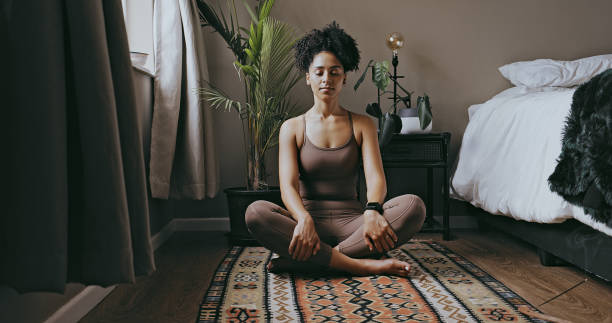
Somewhere near your altar you should have a dedicated space for you to pray or meditate.This space should strike a balance between comfort and alertness, ensuring that you’re relaxed, but not too comfortable that you risk falling asleep. Ideally, you’d be sitting upright so that all of your chakras are aligned as you connect with your divine essence, preferably on the floor.
In my practice, I use a yellow futon cushion that I bought on Etsy with a, surrounded by a myriad of pillows. This setup is particularly conducive when my intention is to journey to different planes, as it offers a level of comfort that allows me to remain lucid.
When I want to practice a more disciplined, mindful breathing session, I use a buckwheat zafu.
Creating a Somatic Association

It’s crucial to establish somatic indicators that signal to your body the beginning of a mediation practice.
I’m a big incense girl myself– an aspect of my inner spiritual child always finds a solace in the ritual of lighting candles and incense before I begin.
After years of consistent use, I’ve found that my body relaxes more easily and my mind becomes more clearer as soon as I catch a whiff of that pleasant smoke. This association between the scent and the practice serves as a powerful subconscious cue.
For those who are concerned about smoke, I recommend using essential oil diffusers as an alternative. Peppermint essential oil, or other minty oils, are particularly effective for creating somatic associations. They also have the benefit of opening nasal passages for improved breathing and aiding in the opening of chakras.
Setting Sacred Space

Before any session, regardless of what you do, you must always set sacred space for each practice. It is essential for creating and purifying an environment conducive to inner peace, reflection, and spiritual growth. Serving as a ritualistic way to transition from the external world to the internal.
Setting sacred space allows you to cultivate a deeper connection with yourself and the divine energies around you. By intentionally, verbally commanding the energies around you, this create boundaries, both energetically and mentally, shielding practitioners from external distractions and influences.
This is a must for a focused and intentional meditation experience, enabling you to dive deeper into your innermost realms.
As we continue on our paths of self-healing, self-love, and restoration of our organic selves, let’s remember the profound significance of creating space for ourselves to properly allow these experiences to unfold.
May these practices serve as guiding lights on our journeys, and lead us ever closer to the divinity within ourselves.


 The Wayward Minds Collective
Leave a comment