Early Guidance

Early inclinations during our formative years guide us to our purpose in life. They give us glimpses of the true nature of our spirits in this realm, before we’re scarred by the fear and anxiety of “living the right way” or “living responsibly.” At this age, our only concerns were finding ways to amuse ourselves and discovering what made us happy.
These natural inclinations were gentle nudges towards our gifts that we would use in our lives, and lead us to truths about our origins.
In first-grade, I was below the target reading level for my age, and my first-grade teacher became especially invested in helping me catch up with the rest of my classmates. I can still see her shoulder-length, all-white hair cleanly tucked behind her ears with a hair clip. The color of the clip always corresponded with the dress she was wearing. The day I finally finished reading a book aloud to her without any corrections, she wore a ladybug dress. As she proudly handed me a gold star sticker, I remember being distracted by the ladybugs that also lay behind her ears.
By the end of the year, I had reached an advanced reading level.
Books quickly began to grow into taller and taller piles that lay scattered across my bedroom floor. There was something fascinating about stories and viewing life through the eyes of another person.
As I reflect on what I liked to read as a child, I notice how much I was drawn to mythology. My parents gifted me an illustrated encyclopedia of Greek mythology for Christmas one year, describing in depth the various Gods, Goddesses, heroes, monsters, and demigods. They informed me that I was not allowed to take the book to school because of the classical oil painting illustrations that depicted some partial nudity. I agreed to their condition, my nose thoroughly between the pages for weeks.
Stories Have Meaning

As a child, I couldn’t explain why I was so drawn to these seemingly fantastical stories, but I noticed a pattern in them. Gods and Goddesses with unlimited power and wisdom were still greatly affected by the matters of mankind. They were jealous Gods. They were vain. They were petty. They were lustful. They embodied all the traits we see in the worst of humanity. There were even stories of Gods and Goddesses, particularly Zeus, having children with mortal women and siring demi-god offspring. Why would a God ever stoop so low as to debase himself by having sex with a creature he viewed as so far beneath him?
But alongside these tales of Gods and Goddesses, there were many stories of humans and demi-gods performing nothing short of miracles. Hercules, Odysseus, Jason and the Argonauts, and Orpheus are all tales of human beings overcoming insurmountable odds and triumphing against a multitude of challenges, most of them supernatural. Why, in these stories, do the humans seem more god-like and pure than the actual Gods? None of these heroes began their journey as perfect figures, but by the end, they were nothing short of immortal. If not literally, as a sort of reward for their heroism, then at least through the tale that was told of them long after their death. I found myself far more fascinated with the tales of man than the drama of Olympus, inspired by their cultivation of wit, spirit, and tenacity. In their own way, each of these heroes developed a state of divinity far purer than any of the Gods because of this adversity they faced. They earned their right to be immortal.
This is not to say that none of the Gods faced adversity themselves, but when they overcame it, it was expected of them—they are the Gods. Their mistakes and trials were not as meaningful because they were immortal—there was no need for them to evolve to become better than they were. There was no end, no death, and no fear that awaited them at the end of a poorly lived life. There was no reason to change because they spent their eternities in a constant state of being worshiped. They were expected to be nothing less than perfection, and even when they weren’t, it was not an issue.
These Greek myths taught me from a very early age the importance of trials and perseverance. There was always a lesson to be learned. As human beings, we have a need for meaning. We teach complex life lessons and messages to our young through children’s books and parables because we understand that the full meaning of something as simple as “patience” can only be conveyed with a story.
We learn this when we’re young. Stories have meaning. They have to; if they didn’t, they would merely be a waste of time. Surely stories, one of the most ancient forms of communication since the development of language and speech, are sacred in that regard. We understand that the hero undergoes a journey because they have a great purpose.
Earning Immortality
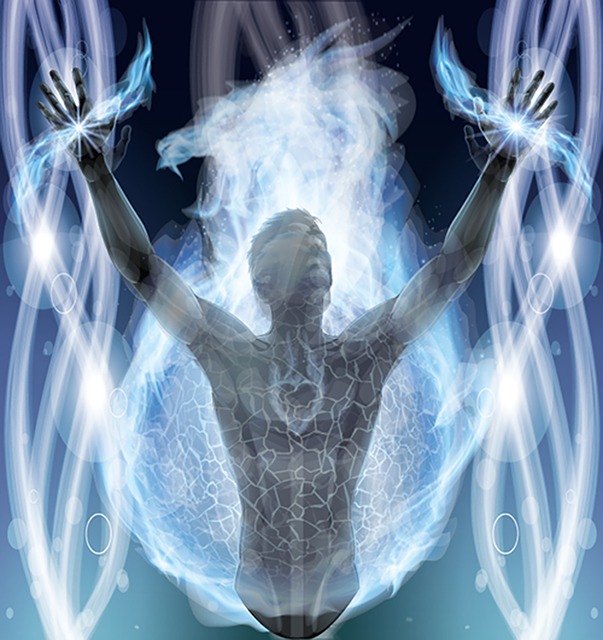
The pessimist will say that the projection of this need for meaning onto the chaos of reality is what spawned this sacred understanding of trials and adversity in stories. The human need for order and control transcended into the depths of their imagination, birthing all these fantastical tales so they might feel an inkling of control in their lives. Stories are the way the mind rationalizes away the seemingly unexplainable.
There is a fantastic discrepancy between the readiness we have to find symbolism in literature and myth, which we cannot apply to our own lives. It’s much easier for us to notice the delicate intricacies of complexity and meaning in the fictional, believing that our lives are nothing but chaos—bound only to the whims of fate and chance.
Nothing is random, immortal soul.
In a realm where anything and everything could happen, it makes more sense that we take note of what does happen.
Some of the heroes of Greek myth were so courageous in their trials and tribulations that they were granted entry to the Elysian-Fields—a paradise that allowed mortals to be akin to the Gods and live an eternal life of bliss, prosperity, and peace. This concept is not unlike the Christian perspective of heaven. It is an asylum from the agony of being human that had to be granted to man. As a child, this is where I found an issue with Greek myth. There were so many impossible feats that these humans had already accomplished—from tricking Gods and Goddesses, to sneaking into the Underworld themselves and reclaiming lost souls, to saving countries from immortal monsters that everyone else was afraid to defeat. Why is it that they still relied on an outside power for anything after already performing so many acts of, dare I say, God?
These humans have already more than proven themselves to be just as supernatural as the Gods of Olympus who gazed lazily upon them.
The pessimist would claim, ‘Yes, it is a myth. That is the point,’ but I disagree. As I’ve gotten older and learned more about the nature of the cosmos and the endless depths of the human subconscious, I understand what drew me to these myths in the first place, what draws everyone to stories of people overcoming their humanity to become something greater than themselves. It is in our nature to love such things because they speak to our purpose of being alive, in this moment, in our current human form.
We are living to overcome the trials of being human, and to unify ourselves with our true, immortal nature– much like these various Greek heroes.
It is the same movement that we feel in the deepest parts of ourselves when we hear inspiring tales of the impossible and the improbable– they give us hope, as they are reminders of our organic state as divine beings of the cosmos. We have just forgotten this along our many trials of being human.
The Villains of Our Story
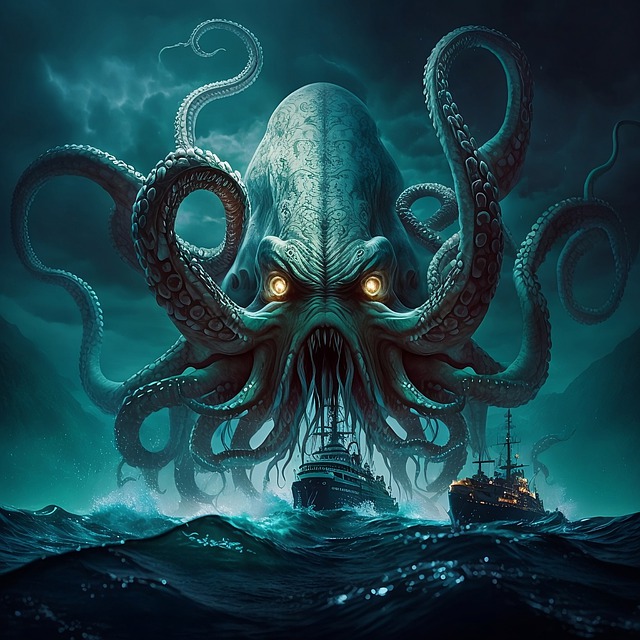
Most of us do not have tales of slaying a woman with hair made of snakes that turns other men to stone with a simple look. The villains of our tales are far more sinister because of their subtlety. Our biggest enemy in the trial of being human is not merely something that can be vanquished with a single battle.
It is ourselves.
There is a movement of what I like to call “steam-rolling motivation” that trends on media. Some phrases that spawn from this are “Get out of your own way,” or “Stop being a scared little b***h, and do it.” While it works for some, for most, it isn’t that simple.
The Eternal Forest

Imagine you are a simple forest dweller. You’ve grown alongside these trees all your life– they provide you with berries, nuts, and fruit. You want and need for nothing. You gather your water from the river that runs through the forest– it is clean and crisp when you scoop it into your palm, easily quenching your thirst. You’ve known these woods all your life, and you can’t see outside of them. It is your world. You live in it, breathe in it, sleep in it, eat in it. You can’t live without it. It is you.
As you grow older and wiser, you learn ways of optimizing the forest to better serve you. You create rudimentary mechanisms for harvesting the fruit, and eventually these become so advanced that you gather other people to work the machines, allowing you to harvest even greater quantities. Your community in the forest grows, and you become busier. New tasks arise with this evolution. You have to manage disputes between workers now. You need to cut the trees to make shelter. You need to harness the movement of the water as an energy source to power your machines. There were so many new responsibilities that you weren’t aware came along with improving your simple forest.
One day, you feel an inclination to look for certain root that you liked to gnaw on in your earlier years. You dig next to a shrub and find the root, except it is black. It is rotting. This is when you notice– the whole forest is rotting. It is suffering.
Now the question becomes, what is the source of the rotting forest? It is crowded with people, machinery, houses, hierarchies, and even religious systems. It can’t all be harming the forest, right? You must now begin the arduous task of discovering what is helping and what is harming the forest. There are some things that now reside in the forest for the better, and there are other things that reside in it for the worse– but you don’t want to be without them. You can’t imagine your life anyway else now.
This is the conundrum of the human spirit and mind. It is a forest that is wounded within us, and in our misguided attempts to better understand and evolve, by attempting to transform ourselves into something that we are not, it becomes difficult to ascertain what is real, what is necessary.
We call these upgrade and evolutions within us “personality” or “trauma responses.” They are behaviors and thoughts that we’ve picked up or inherited from a young age. Many of us identify with these, believing them to be ourselves, when really they are implants within the forest. It takes a courageous spirit to take a long, serious look at these trees and acknowledge the state of the forest. This is an eternal forest. It will outlive all of our human contraptions and mechanisms that we have tried to use to contain it.
You are Living to Overcome

Just as the Greek hero sets out on his journey, we must embark on our own journeys of saving ourselves, from ourselves. However, it will be far more challenging because we do not always know who the villains and the heroes are within our stories. Yet that uncertainty is what makes them so much more beautiful.
We are living. We are breathing. We are loving. And we are dying. But it is not in vain. It is not due to the whims of the cosmos. It is not because there are Gods on a mountain who delight in our agony. It is because within each and every one of us, there is an aspect of divinity and immortality that transcends all hardships and struggles. It lives on even after our mortal body turns to dust again. We only reconnect with this aspect once more after seeing and transcending the darkest pits of hell in our journeys.
Because no mortal matter can stand in the way of an immortal being.
And until we transcend that darkness, we cannot reclaim that aspect of ourselves. And it is not once, or twice, or even three times. It is lifetimes and lifetimes of doing so. It will be difficult. It will be hard. It will seem impossible at times to our human mind, but this is where we listen to our intuition, to the voice of our eternal forest, that encourages us to try again.
This voice is not courage. It is not optimism. It is not even faith that things will get better. It is a deep and ancient knowing that you have done this before, and you will do this again.
You will rise and set like the sun, and will flow like the tides of the ocean. To your human it will seem like an eternity, an endless cycle that never ceases. But to the sun and the tides, it is but a brief moment that will soon fade.
The myths were never just myth. Our lives were never devoid of meaning and purpose. The purpose was the creation of the myth itself.
How will you write yours?
One response to “The Myth of You”
-
I find it fascinating that cultures around the world have similar myths and find inspiration from similar “gods” …
LikeLike


 The Wayward Minds Collective
Leave a comment