The Division

The librarian at my elementary school was divisive– there were kids who would cheer at the thought of going to the library, and there were equally as many who would groan at the very mention of the name “Ms. Thomas.”
She had a sharp-tongue that she was perhaps too eager to use on her students, and was quick to notify children when they were being too loud.
She would put her plump finger to her lips and “shh!”, sending spittle through her clenched teeth.
She would give us tips on taking notes: how we should write without letting our eyes leave the screen, because these repetitive glances we took between them was an inefficient use of our writing time.
“This will prepare you later for taking notes in college,” she claimed, as she gave a quick push of her thick glasses back up the bridge of her nose.
I remember she would have us write down our passwords for the sites she would have us use, telling us, “You need to write PWD for password. It’s an acronym, and whenever you see it, that what it stands for. “
“Remember this. It’s saves you the time of having to write out the full word ‘password’.”
She was always about efficiency.
Everyone would complain about her constant ‘efficiency tips’, and her constant concern for our futures.
What use do third graders have for efficient note-taking tips?
I was in the faction of children who loved her– she had as much love for books that I had. Whenever I could, I would sneak back into the library and talk to her about the recent books I had read, and she would have an endless list of book recommendations.
She introduced me a illustrative book of various Shakespeare plays, and was part of the reason for my passion for stories at such a young age.
To get the class to quiet down, she taught us a chant that we would whisper together when we got too loud.
“Lower your voice, raise your mind,” pantomiming a closed mouth with our hands, and pointing to our temples.
Even the children who didn’t like her enjoyed this part of the class.
The other day, I felt overwhelmed by all the work I needed to do. I was going through a to-do list mentally in my head, and my body grew heavy under the pressure of needing to be productive. My thoughts grew too loud, and poured incessantly, reverberating in my mind like a faucet running and echoing in an empty room.
I felt myself drowning, and I hadn’t even begun to do anything yet.
I suddenly hear, clear as day, a thought I haven’t had in years.
“Lower your voice, raise your mind.”
The Critical State of Deference

“Lower your voice, raise your mind.”
~ Ms. Thomas
I’ve alluded to this in other posts, but I suppose now is the moment where I dive into it a bit more fully– the miseducation of the modern spiritual individual.
Anyone who has ever gone to a school has heard the phrase “critical thinking.” They might’ve briefly explained to you what it meant, but I took the liberty of consulting with Google.
“Critical thinking is the ability to analyze information and form a judgment.”~ Scribbr
“Critical thinking is the analysis of available facts, evidence, observations, and arguments in order to form a judgment by the application of rational, skeptical, and unbiased analyses and evaluation.” ~Wikipedia.
Relying on these definitions, and when you look at your own personal experiences with education, we find that this system primarily relies on reasoning with your intellectual mind– as this is what makes us superior to the animals.
We’re taught to praise our prefrontal cortex because this is ultimately what separates us from the monkeys, right?
We’re taught to constantly be in a state of skepticism about the facts we’re presented and come to our own conclusions. Admittedly, this is not an inherently wrong concept to learn, as it introduces us to the subtle art of discernment. However, the hypocrisy lies in the instances where your conclusions do not “match” those of the teacher. There are wrong answers, and wrong conclusions that you can draw that the teacher must correct you on.
Instead of teaching us about the ability to draw our own conclusions, what the educational system really did was train us to be in a constant state of deference. Someone else always has the right answer that you must also come up with on your own.
“As I am, I am easily fascinated by thought, enamored of it, and almost totally dependent upon it to run my life. This is the result of bad education, from birth on. Thought has its place and is a most useful tool. It is a marvelously obedient servant, but a cruel, ruthless and inefficient master. It is not meant to be the master, and yet our education system trains it to be exactly that. It is not capable of doing what we ask of it, so it “breaks down” constantly, and is both ineffective and inefficient at running my life.”
~~ Red Hawk, Self Observation, 33
You have to think about the “right” laws of nature, or the “right” way of thinking to match what everyone else thinks.
As a result, we learn to think, and think, and think, and think– utilizing the slowest, most minuscule part of our consciousness– our intellect.
This is by design, immortal soul.
It is a reflection of the cosmic location that we currently reside in– a darker period in the endless cycle of time where there is a fascination with the physical and intellectual. We have become so out of touch with our organic light, and the higher, more advanced, realms of consciousness.
The natural mind is not in a constant state of analyzing or objectivity, but rather as the flame of a candle, flickering and ebbing in a constant state of being. Four millennia ago, we were able to do this without any difficulty whatsoever.
The states of objectivity, and skepticism are learned behaviors that have contaminated our current mind, as this not true critical thinking, but rather teaching us to distrust one of the most powerful, ancient, and innate systems that we were born with. The one that always leads us to truth, but we have been taught not to trust it because we cannot prove that is is valid.
Because others have not written about it in academia.
It is our intuition. The small, quiet knowing that we get, and push aside hastily.
“Enlightenment is not an experience!… If you see oneness as an experience to be attained or that may one day happen to you, then you are caught within that straight line between two points… Ironically, transcendence does not take you away from life… it places you right in the heart of life, where you have always been…[it] brings a sense of trust that cannot be described. One cannot even really use the word ‘trust’ to describe [it]… because trust suggests duality again– that there is somehow a trustor and a trustee.”
~~ Richard Rudd, Gene Keys
We have been taught that because we cannot prove something with rhetoric, or with physical, tangible evidence, and reasoning, then it simply cannot be true.
“For seeing is believing.”
Your Internal Evidence
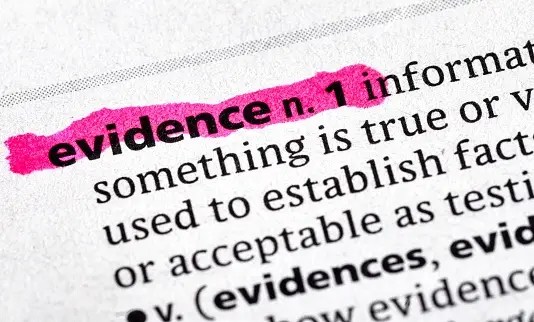
What of the evidence of you just knowing? What of the evidence of you acknowledging that you are a vessel, and any thought or feeling that spawns within you, or more accurately that you channel, is always right because YOU had it?
This deference begins as a child, is nurtured in schools, and runs rampant in spiritual communities. There is something unique about the spiritual individual in that we have learned to listen to our intuition, or at the very least, are aware of it. At the end of the day, we are still in a state of deference to pastors, mentors, guides, coaches, etc.
We have become so depraved of trust in our spirit, and the “critical thinking” of education, that when it comes to spirituality, we turn a blind eye to things that we know don’t resonate with our true sense of knowing.
We have been so starved of a sense of empowerment in every aspect of our lives, that when it comes to the avenue where we need it the most, we are too scared to trust that which is truly there to guide us.
We have been taught to do so.
There are so many stories of corruption in churches, where an older person in power, and “in power with the lord”, getting away with such dastardly crimes where they abuse that power of “spiritual superiority” that no one dare to oppose out of a fear that they will somehow prevent them to going to heaven.
But we also see this crime with teachers, and unfortunately, parents as well.
More importantly, this state of deference has also taught us to look outside of ourselves for answers, and connections with the divine through others. We believe them to be the ultimate source of healing ourselves, and fixing all of our problems.
Yet the true Source God is within you. This is what your Higher, true Self is. It is God. You are one with God.
God is all creation, and as part of creation you are one with this same divinity.
You see how this goes against EVERYTHING we’ve been taught?
“… Our relationship with god or a set of Gods is a purely co-dependent relationship because it is based on this need for outside authority. It is here in the 19th Gene Key that one of the great human stories is coded– the story of our relationship to God. As long as man believes in a God outside of himself, the frequency of our planet will remain at the level of the 19th Shadow. The vibration of human suffering depends on the existence of a separate authority of a higher frequency than us. This last sentence is the ultimate definition of what it means to be a victim, which is what characterizes the shadow frequency… In creating God out there, we have forgotten the power that lies dormant within us.”
~~Richard Rudd, Gene Keys
I must reiterate that your true self, your Higher Self, is God, as it is immortal, with no beginning and end. Your Higher Self is an ancient consciousness within you that lies dormant in those who have not cultivated enough organic light within them– which is the majority of the human collective at present.
The knowledge that you need to learn language when you are first born is from this source. The knowledge of how to beat your heart and pump blood through your veins to the rest of your body is knowledge from this source. The knowledge that you have to blink, or how to move your fingers, toes, eyes, and legs are all something that you were not taught, but knew how to instinctively do. When you feel you are being watched, when something doesn’t feel right, when you know you are destined for something greater than sitting in a desk all day.
Behold a mere glimpse of the knowledge of your true self– you have lived before, and know how to do these things, and what your purpose in this life is.
What makes it difficult to listen to our intuition and our Highest Self, aside from being taught the need to verify knowledge externally and to distrust these inner knowings, is the constant chatter that we have developed to process the world around us with our conscious mind. In the act of developing these so-called “critical thinking” skills, we have learned that a mind that is constantly thinking is normal.
Do not misunderstand me, I am not saying that there is no room for critical thinking and discernment. If anything, I am celebrating these. Any new external information you obtain, spiritual or otherwise, should always be validated and verified.
But not by someone else who claims to know more than you, but by you, your Higher Self, and those you know with your being you can trust the guidance of. You are always more than allowed to consult, but anyone who tries to tell, rather than guide you to your own experience on anything is either unintentionally doing you a disservice, or attempting to keep you in a position of disempowerment.
Never doubt any inner knowing or suspicion you may have. These are the true wisps of knowledge and clarity that we can trust completely.
In that moment, my Higher Self dredged through the memories of my childhood to remind me of the days of Ms. Thomas and her quiet chant:
“Lower your voice, raise your mind.”
There are many voices that we have learned to let echo in our minds, but once we learn to silence this chatter, this is when we truly raise our mind. Our true mind, and our true voice.
The voice of within that speaks the wisdom of your true self.
We have learned to use ants to carry us instead of using our legs– and then we wonder why so many of our ants cannot be controlled, and run rampant. Ants were never made to carry the weight of humans, and we were never made to ride ants.
We were made to use our legs.


 The Wayward Minds Collective
Leave a comment